



What to Do When Your Hot Water Stops Working
Most homeowners think hot water is just there. Turn the tap, wait a second, done. But when it vanishes mid-shower or right before dishes, you realize how much you depend on it. The good news? Most hot water failures aren't catastrophic. They're fixable — sometimes in minutes. The bad news? If you don't know where to look, you'll waste time, money, or both.
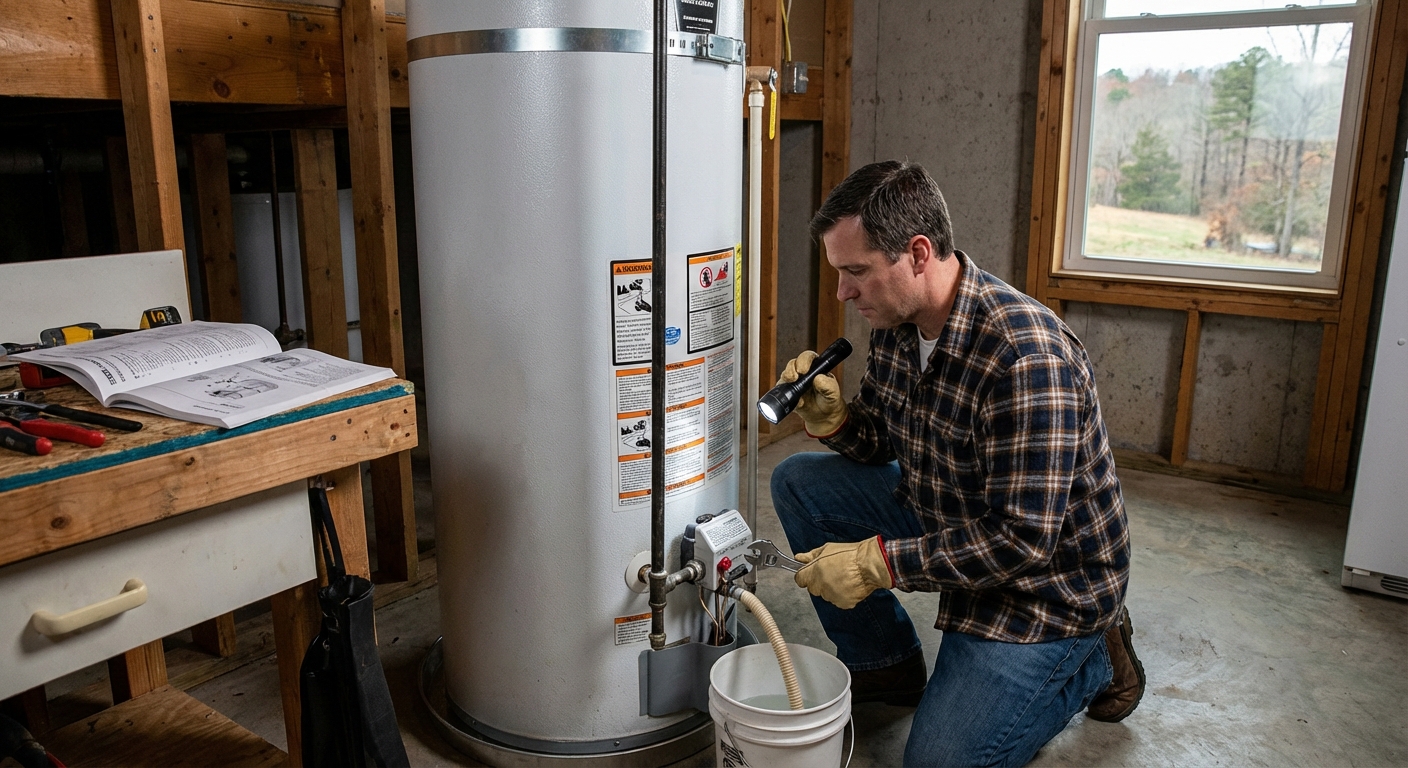
So here's what we do. We check the obvious stuff first. Then we dig deeper. Every step has a reason, and every fix has a paper trail — or at least a reset button. Don't assume it's the heater until you've ruled out everything else. And don't call a pro until you've done the homework.
Check Every Faucet Before You Blame the Tank
Start by testing multiple fixtures. Run the hot side in the kitchen, bathroom, and laundry. If one tap stays cold while the others heat up, the problem isn't your water heater — it's that specific line or valve. Could be a clog, a shut-off that got bumped, or a cartridge that died.
But if nothing's hot anywhere? That's when we move to the source. Don't skip this step. We've seen people replace heating elements when all they needed was a new faucet aerator.
Power and Fuel Come First
Electric heaters need electricity. Gas heaters need gas and a flame. Sounds basic, but it's where most failures start. Head to your breaker panel and look for anything tripped. Flip it back, wait ten minutes, and test again.
For gas units, check the pilot light. If it's out, relight it using the instructions on the tank. If you smell gas or the pilot won't stay lit, shut off the gas valve and call your utility company. That's not a DIY moment.
The Thermostat Might Be Lying to You
Someone bumps the dial. A power surge resets it. A kid gets curious. Whatever the reason, thermostats get knocked out of range more often than you'd think. We recommend setting it between 120°F and 140°F — hot enough to kill bacteria, cool enough to avoid scalding.
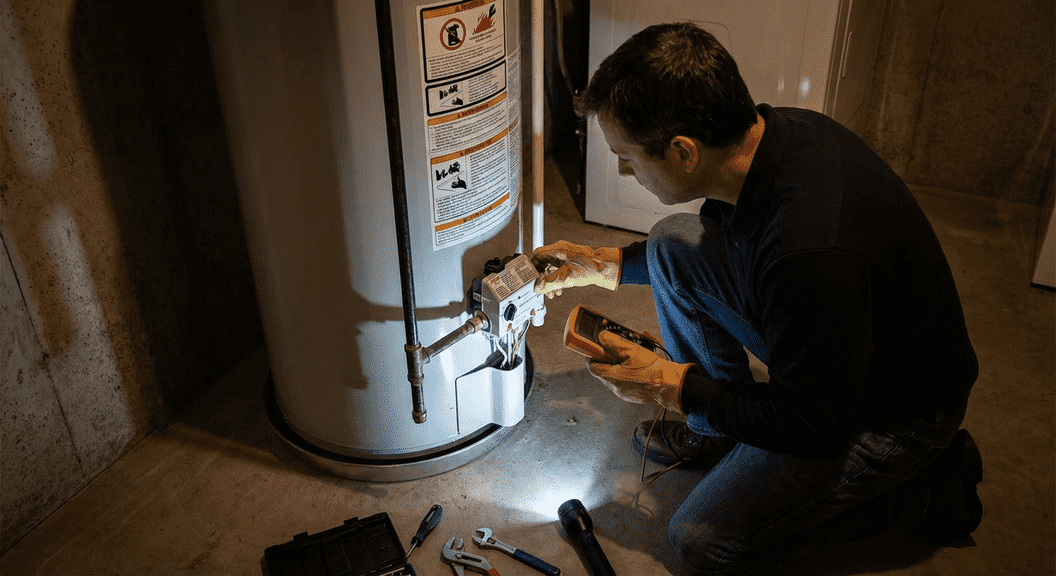
If it's set too low, crank it up and give the system an hour to catch up. If it's already maxed out and you're still freezing, the thermostat itself might be toast. That's a part you can replace, but you'll need to kill the power first.
Leaks Mean Stop Everything
Walk around your water heater. Look at the floor, the connections, the pressure relief valve. Any moisture? Any rust stains? Any pooling? If yes, shut off the water supply to the unit and don't turn it back on until you know where it's coming from.
Leaks can mean a cracked tank, a blown gasket, or a valve that's venting steam. Some are fixable. Some mean replacement. Either way, running a leaking heater is asking for a flood — or worse, a rupture.
Sediment Clogs More Than You Think
Hard water leaves deposits. Over time, those deposits settle at the bottom of your tank and coat the heating element. When that happens, your heater works harder, heats slower, and eventually stops heating at all.
Flushing the tank clears it out. Attach a garden hose to the drain valve, run it outside or into a floor drain, and let it flow until the water runs clear. Do this once a year if your water's hard. Do it every two years if it's soft. Either way, do it.
Tankless Units Speak in Code
If you've got a tankless system, check the display panel. Most units throw an error code when something's wrong. Could be a dirty filter, a venting issue, or a sensor glitch. Your manual will tell you what each code means and whether you can fix it yourself.
Common fixes we see include:
- Cleaning the inlet screen filter
- Resetting the unit after a power surge
- Checking for blocked exhaust vents
- Verifying gas pressure or electrical supply
- Descaling the heat exchanger if you're in a hard water area
Age Matters More Than Brand
Water heaters don't last forever. Most tank models give you eight to twelve years. Tankless units can push twenty if you maintain them. But once they hit that threshold, failures come fast. Heating elements burn out. Anodes corrode. Tanks rust through.
If your unit's past its prime and you're chasing multiple issues, replacement might be smarter than repair. We've seen people dump hundreds into a dying heater only to replace it six months later. Don't be that person.
When DIY Stops Making Sense
You've checked the breaker. You've tested the thermostat. You've flushed the tank and reset the system. Still no hot water? That's when we call someone who does this for a living.
Here's what pros handle better than we do:
- Replacing faulty heating elements or thermostats
- Diagnosing gas valve or ignition failures
- Rewiring electrical connections safely
- Testing pressure relief valves and expansion tanks
- Recommending whether to repair or replace based on cost and lifespan
Maintenance Beats Panic Every Time
We don't wait for the water to go cold. We flush tanks annually. We test pressure relief valves. We check anodes every few years and replace them before they disintegrate. We listen for weird noises — rumbling, popping, hissing — and investigate before they turn into failures.
Here's what a solid maintenance routine looks like:
- Annual tank flush to remove sediment buildup
- Thermostat check to confirm accurate temperature settings
- Anode rod inspection every three to five years
- Pressure relief valve test to ensure it's not stuck
- Visual inspection for leaks, rust, or corrosion
Documentation Saves You Later
Keep your receipts. Keep your manuals. Keep a log of when you flushed the tank, replaced the anode, or had a pro come out. If your heater's still under warranty, you'll need proof of maintenance to make a claim. If it's not, you'll want records to show the next owner or your insurance company.
We also recommend snapping photos of your setup — model number, serial number, installation date. When you're on the phone with a technician or ordering parts online, that info speeds everything up.
Know What You're Paying For
If you do call a pro, get a clear estimate before they start. Ask what's covered, what's not, and whether the fix comes with a warranty. Some companies charge a flat diagnostic fee. Others roll it into the repair cost. Either way, you should know upfront.
Red flags we watch for:
- Vague pricing or refusal to provide a written estimate
- Pressure to replace when a repair would work
- No license or insurance verification
- Unwillingness to explain what went wrong or how they'll fix it
- Skipping permits for new installations or major work
Cold Showers Are Optional
Losing hot water isn't the end of the world, but it's not something to ignore either. Most failures give you warning signs — inconsistent temps, strange sounds, rusty water. Catch them early, and you'll avoid the scramble. Miss them, and you're stuck troubleshooting in the cold.
We treat hot water like we treat any other system in the house. Check it regularly. Fix small problems before they grow. And when something breaks, don't guess — follow the steps, document what you find, and call in help when you hit your limit. For professional hot water heater services, including installation, repair, and maintenance, contact us today. You can also request a quote for your specific needs, explore our full range of services, learn more about us, or read testimonials from satisfied customers. That's how you keep the water hot and the repairs cheap.
Let’s Get Your Hot Water Flowing Again
We know how disruptive it is when your hot water suddenly stops working. If you’ve tried the basics and still can’t get things back to normal, let’s tackle the problem together. Give us a call at 678-410-4060 and let’s talk through your options. If you’re ready to get started, request a quote and we’ll help you restore comfort to your home without the guesswork.
‹ Back
Recent Posts
-
-
-
What to Do When Your Hot Water Stops Working
April 22, 2026
-
What Well Pump Replacement in Dawsonville Costs
April 8, 2026
-

.png)