



Common Reasons Septic Backups Happen in Dawsonville Properties
Most Dawsonville homeowners think septic systems just work. Flush, drain, forget. But these underground workhorses aren't invincible — and if you're not paying attention, you're setting yourself up for a mess. Backups don't announce themselves politely. They show up in your yard, your drains, and sometimes your living room. And by then, the damage is already done.
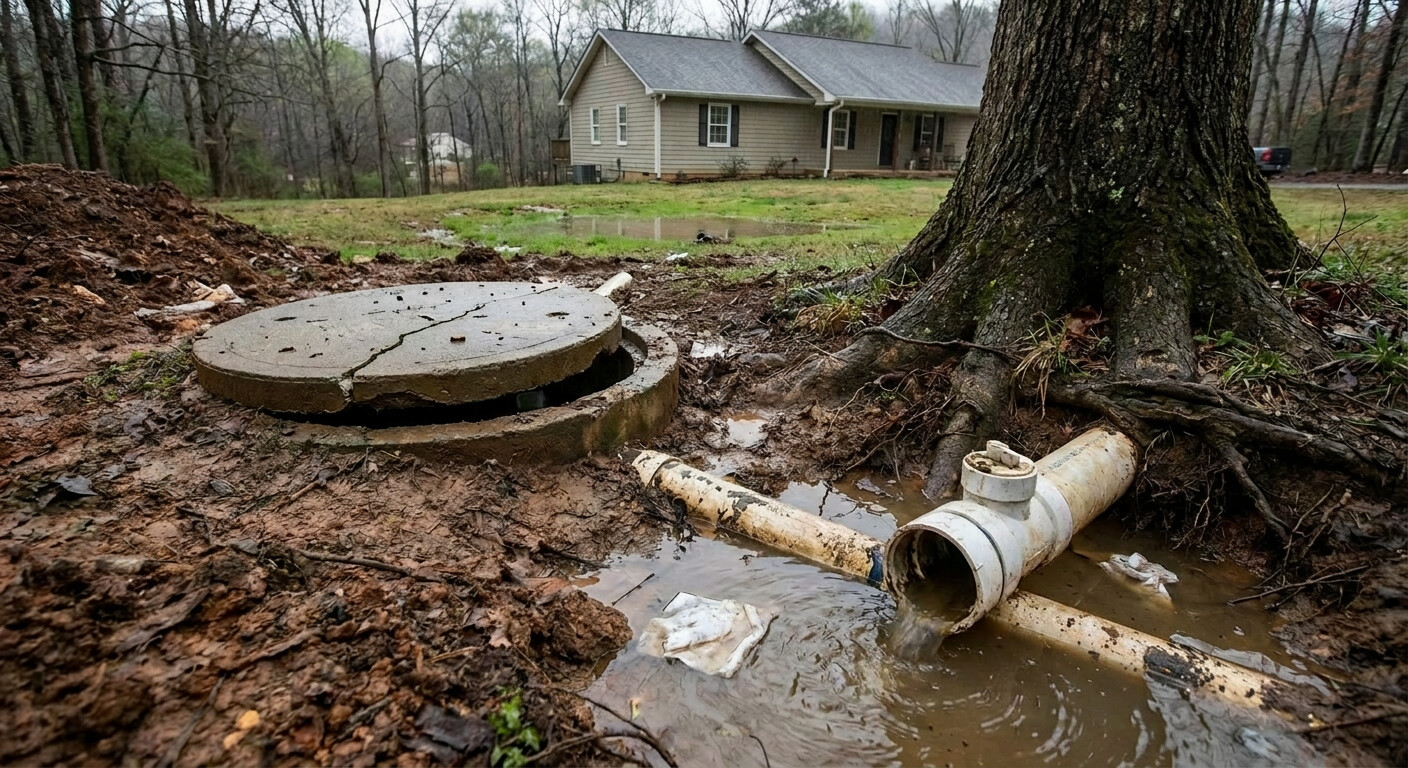
So here's the reality. If you're living on septic, that system needs respect. Every flush matters. Every gallon counts. And every shortcut you take now could cost you thousands later. The good news? Most backups are preventable. You just need to know what you're up against.
Skipping Maintenance Is Asking for Trouble
Septic tanks fill up. That's not a maybe — it's a guarantee. Solids settle at the bottom, scum floats at the top, and the liquid in between flows out to your drain field. But when you skip pumping, those solids pile up until there's nowhere left for the wastewater to go. Then it backs up into your house or floods your yard.
We've seen it happen to properties all over Dawsonville. Tanks that haven't been touched in a decade. Owners who didn't even know pumping was a thing. The fix isn't complicated, but ignoring it is expensive. Get your tank pumped every three to five years, depending on usage. That's not optional maintenance — it's the baseline.
- Tanks should be inspected during every pump to check for cracks or damage
- Larger households or heavy water use may need more frequent service
- Waiting until you smell something is waiting too long
- Pumping records help you stay on schedule and prove maintenance if you sell
Overloading the System With Water
Your septic system can only handle so much water in a day. Push past that limit, and you're flooding the tank faster than it can drain. Leaky toilets, back-to-back laundry loads, marathon showers — it all adds up. And when the tank can't keep pace, solids get pushed into the drain field or wastewater backs up into your plumbing.
Dawsonville properties often sit on larger lots with more bathrooms, more appliances, and more people using water throughout the day. That's great for space, but tough on septic. Spread out your water use. Fix leaks immediately. And if you're adding a bathroom or hot tub, make sure your system can handle the extra load.
- Run dishwashers and washing machines on different days when possible
- Install low-flow fixtures to reduce daily water volume
- A running toilet can waste hundreds of gallons a day without you noticing
- High-efficiency appliances aren't just good for your power bill — they're easier on septic too
Flushing What Doesn't Belong
Septic systems are built to break down human waste and toilet paper. That's it. Toss in wipes, feminine products, paper towels, or anything labeled "flushable," and you're clogging pipes and filling your tank with junk that won't decompose. Over time, those items create blockages that choke the system and force backups.
We get it — convenience is tempting. But flushing the wrong stuff is one of the fastest ways to wreck a septic system. Educate everyone everyone in your household. Put a trash can in every bathroom. And if it didn't come out of your body or off a toilet paper roll, it doesn't go down the drain.
- Even "flushable" wipes don't break down like toilet paper
- Grease, oil, and food scraps belong in the trash, not the sink
- Medications and chemicals can kill the bacteria your tank needs to function
- Cat litter, dental floss, and cotton swabs are all septic killers
Tree Roots Crashing the Party
Dawsonville's got beautiful trees. Mature oaks, sprawling pines, and plenty of shade. But those roots are hunting for water, and your water and sewer lines are a prime target. Roots can slip through tiny cracks in pipes, then expand and create blockages or even shatter the line entirely. Once they're in, the damage escalates fast.
If you've got large trees near your septic system, you're playing a risky game. Regular inspections can catch root intrusion early, and root barriers can help protect vulnerable lines. But the best move? Plan your landscaping with your septic layout in mind. Don't plant water-hungry trees anywhere near your tank or drain field.
- Willows, maples, and poplars are notorious for aggressive root systems
- Root barriers should be installed during construction or system replacement
- Camera inspections can reveal root damage before it causes a backup
- Cutting down a tree won't stop the roots — they'll keep growing for years
Drain Field Saturation Shuts Everything Down
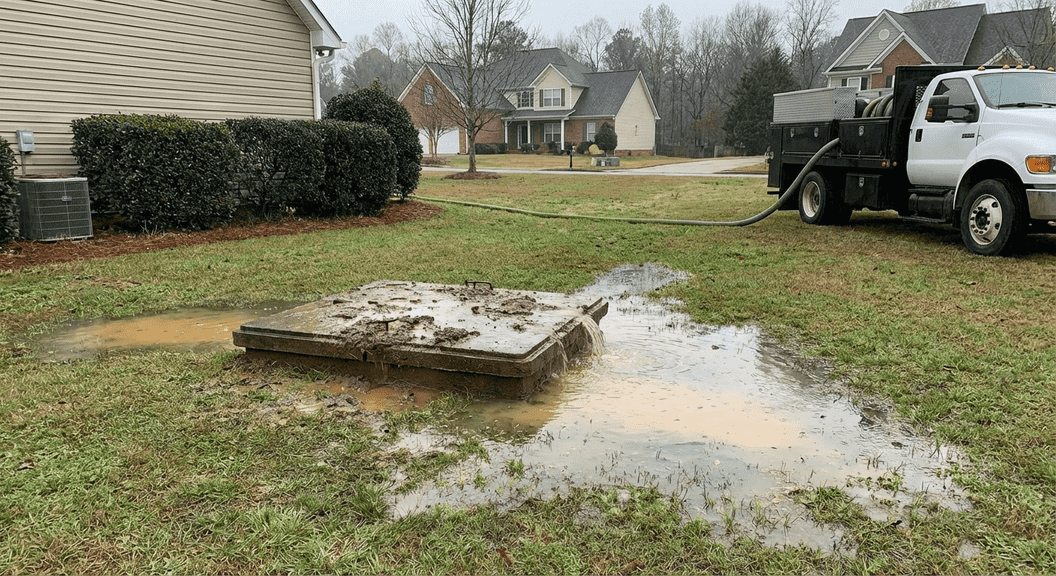
Your drain field is where treated wastewater gets absorbed into the soil. But if that soil is already saturated — from heavy rain, poor drainage, or overuse — the water has nowhere to go. It backs up into the tank, then into your house. And once a drain field fails, repairs are neither quick nor cheap.
Dawsonville sees its share of storms, and properties with clay-heavy soil or poor grading are especially vulnerable. Protect your drain field by keeping heavy vehicles off it, redirecting roof runoff away from it, and never planting anything with deep roots over it. If the ground above your drain field is spongy or smells foul, call a pro immediately.
- Parking cars or equipment on the drain field compacts soil and crushes pipes
- Gutters and downspouts should drain away from the septic area
- Grass is the only thing that should grow over a drain field
- Soggy spots or standing water are red flags that the field is failing
Bad Installation Haunts You Forever
Sometimes the problem isn't what you did — it's what the installer did years ago. Undersized tanks, improperly placed drain fields, or systems installed in unsuitable soil can cause chronic backups no matter how well you maintain them. If your system was never right to begin with, you're fighting an uphill battle.
Before buying property in Dawsonville, get the septic tank system inspected by someone who knows what they're looking at. And if you're installing a new system, don't go with the cheapest bid. A properly designed and installed system will outlast you. A botched job will haunt you for as long as you own the place.
- Tank size should match household size and water usage patterns
- Soil percolation tests determine whether a site is suitable for septic
- Local codes exist for a reason — shortcuts lead to failures
- Permits and inspections protect you from fly-by-night installers
Chemicals Kill the System From the Inside
Your septic tank relies on bacteria to break down waste. Pour bleach, drain cleaner, or harsh chemicals down the drain, and you're killing off the very organisms that keep your system running. Without them, solids accumulate faster, sludge builds up, and backups become inevitable.
Switch to septic-safe products. They're not hard to find, and they won't wreck your system. Avoid antibacterial soaps, heavy-duty cleaners, and anything that says "do not flush." Your tank isn't a chemistry experiment. Treat it gently, and it'll treat you right.
- Vinegar and baking soda work for most household cleaning without harming bacteria
- Septic additives are usually unnecessary if you're maintaining the system properly
- Paint, solvents, and pesticides should never enter your septic system
- Even small amounts of harsh chemicals can disrupt the bacterial balance
Prevention Beats Repair Every Time
Septic backups don't happen overnight. They're the result of neglect, misuse, or bad luck compounding over time. But the thread running through almost every backup is the same — someone didn't take the system seriously until it was too late. We've worked with enough Dawsonville property owners to know that the ones who stay ahead of maintenance, watch what goes down the drain, and respect their system's limits are the ones who never deal with a backup.
If it's been years since your last inspection, or if you're noticing slow drains, gurgling pipes, or foul odors, don't wait. Contact us before a small issue becomes a catastrophe. Your septic system is one of the most important — and most overlooked — parts of your property. Our services include comprehensive septic tank maintenance, and you can also request a quote to get started. Treat it that way, and it'll keep working long after you've forgotten it's even there.
Let’s Keep Your Septic System Working Right
We know how much peace of mind comes from a septic system you can trust. If you’re ready to avoid costly backups and keep your Dawsonville property running smoothly, let’s talk about the best solutions for your needs. Give us a call at 678-410-4060 or request a quote today, and together we’ll make sure your septic headaches are a thing of the past.
‹ Back
Recent Posts
-
-
-
What to Do When Your Hot Water Stops Working
April 22, 2026
-
What Well Pump Replacement in Dawsonville Costs
April 8, 2026
-

.png)