



When to Know It's Time for Septic Pumping in Dawsonville Homes
Most Dawsonville homeowners think septic systems just work. Flush, drain, forget. But the tank beneath your yard doesn't care what you think—it fills up whether you're paying attention or not. And when it does, the signs aren't subtle. Slow drains, foul smells, soggy patches in the grass. By the time sewage backs up into your shower, you're already past the point of easy fixes.

So here's the reality. If you're living on septic, pumping isn't optional maintenance—it's the difference between a system that lasts decades and one that fails in five years. Every gallon of wastewater leaves a mark. Every flush adds to the load. And every month you ignore the warning signs brings you closer to a repair bill that could've been avoided with a single service call.
The Tank Fills Whether You Notice or Not
Septic tanks don't announce when they're getting full. They just keep accepting waste until the solids pile up and the liquid has nowhere left to go. That's when things start breaking down—literally. The scum layer thickens, the sludge rises, and the effluent that's supposed to flow cleanly into your drain field starts carrying solids it shouldn't.
Most tanks in Dawsonville need pumping every three to five years, but that's not a hard rule. It depends on how many people live in your home, how much water you use, and whether you're dumping grease or running a garbage disposal. The more you put in, the faster it fills. And if you've never had it pumped? You're already overdue.
Drains That Slow Down Aren't Just Annoying
When your sinks start draining slower than usual, most people assume it's a clog. Sometimes it is. But if every drain in the house is sluggish—toilets, showers, kitchen sink—that's not a coincidence. That's your septic tank telling you it's reached capacity and can't handle the volume anymore.
The wastewater has to go somewhere. If the tank is full, it backs up into your plumbing. And if you keep flushing and running water without addressing the root cause, you're not solving anything. You're just pushing the problem further down the line until it becomes a full-blown backup.
Smells That Don't Belong
Septic odors aren't normal. If you're catching whiffs of sewage near your drains, around the tank, or anywhere in your yard, that's a red flag. It means gases are escaping because the tank is too full to contain them properly, or the system is struggling to process what's inside.
We've seen homeowners try to mask the smell with air fresheners or ignore it altogether. That doesn't work. The odor is a symptom, not the disease. And the longer you wait, the worse it gets. By the time neighbors start noticing, you're well past the point where a simple pump-out would've handled it.
What Happens When the Drain Field Gets Overloaded
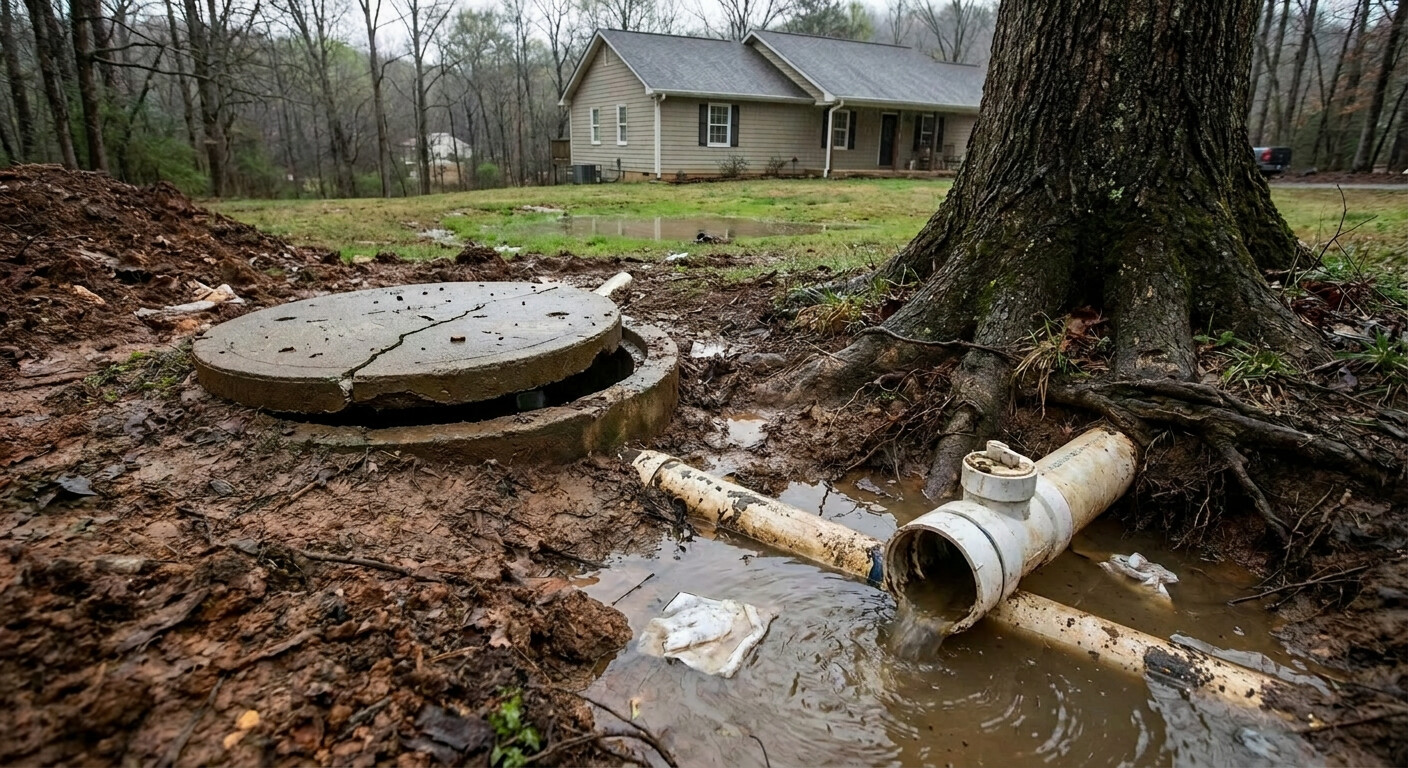
Your drain field is supposed to filter and absorb the liquid effluent that leaves the tank. But when the tank is full and solids start flowing into the field, the soil can't handle it. You'll see standing water, soggy patches, or grass that's suddenly greener and thicker than the rest of your lawn.
That's not a good sign. It means untreated wastewater is surfacing, and your drain field is failing. Once that happens, you're not just looking at a pump-out anymore—you're looking at drain field repair or replacement, which can run into the thousands. All because the tank wasn't pumped when it should've been.
Warning Signs You Can't Ignore
There are a handful of indicators that scream "pump your tank now." Some are obvious. Some are easy to miss if you're not paying attention. But all of them mean the same thing—your system is maxed out and needs professional attention.
- Toilets and drains that gurgle or bubble when you flush or run water
- Sewage backing up into bathtubs, sinks, or floor drains
- Wet spots or standing water near the septic tank or drain field
- Grass over the drain field that's noticeably lusher or faster-growing
- Foul odors inside the house or around the yard
How Often Pumping Actually Needs to Happen
The three-to-five-year rule is a starting point, not a guarantee. If you've got a large family, you're going to fill that tank faster than a couple living alone. If you're running multiple loads of laundry a day or using a garbage disposal, you're adding solids that accelerate the timeline.
Tank size matters too. A 1,000-gallon tank serving a family of five won't last as long between pump-outs as a 1,500-gallon tank serving two people. And if you've never had your tank inspected or pumped, you're flying blind. The only way to know for sure is to have a professional check the sludge and scum levels.
Factors That Speed Up the Fill Rate
Not all households put the same strain on their septic systems. Some habits and appliances push the tank to capacity faster than others. If any of these apply to you, you're probably on the shorter end of the pumping schedule.
- High water usage from frequent showers, baths, or laundry
- Garbage disposals that grind food waste into the system
- Older, less efficient toilets that use more water per flush
- Flushing non-biodegradable items like wipes or feminine products
- Pouring grease, oil, or harsh chemicals down the drain
What Happens If You Skip Pumping
Ignoring a full septic tank doesn't make the problem go away. It makes it worse. The solids keep building. The effluent keeps backing up. And eventually, the system fails—either through a backup into your home or a collapse of the drain field.
We've seen homeowners wait until sewage is pooling in their yard or bubbling up through their basement floor. At that point, you're not just paying for a pump-out. You're paying for emergency service, potential drain field repair, and possibly even a full system replacement. All of which could've been avoided with routine maintenance.

Simple Habits That Extend the Life of Your System
Pumping is non-negotiable, but there are things you can do between service calls to keep your system running smoothly. Most of them are common sense. All of them make a difference.
- Spread out laundry loads instead of doing them all in one day
- Fix leaky faucets and running toilets to reduce unnecessary water flow
- Avoid using the garbage disposal—compost or trash food scraps instead
- Never flush anything other than toilet paper and human waste
- Keep heavy vehicles and equipment off the drain field
Why DIY Inspections Don't Cut It
Some homeowners think they can pop the lid and eyeball the tank to see if it needs pumping. That's not how it works. You can't accurately measure sludge and scum levels without the right tools, and you definitely can't pump a tank yourself without specialized equipment.
A professional septic tank service knows what to look for. They'll measure the layers, check for damage, and pump the tank completely—not just enough to make it look empty. They'll also inspect the baffles, the inlet and outlet pipes, and the overall condition of the system. That's not something you can do with a flashlight and a stick.
When to Call a Professional
If you're seeing any of the warning signs—slow drains, odors, wet spots, backups—don't wait. Call a septic service immediately. The longer you delay, the more expensive the fix becomes. And if you're not sure when your tank was last pumped, assume it's overdue and schedule an inspection.
- You've lived in the home for more than three years without a pump-out
- You're noticing any of the red flags mentioned earlier
- You're planning to sell the home and need a clean inspection
- You've had a sudden increase in household size or water usage
- You've never had the system inspected since moving in
Protecting Your Investment and Your Property
Your septic system is one of the most important—and most overlooked—components of your Dawsonville home. It handles waste every single day without complaint, but only if you give it the maintenance it needs. Skipping pump-outs isn't saving you money. It's gambling with a system that costs thousands to replace.
We've worked with enough homeowners to know that the ones who stay on top of pumping never deal with the nightmare scenarios. No backups. No drain field failures. No emergency calls at midnight because sewage is flooding the basement. Just a system that works, year after year, because someone took the time to maintain it properly. If you need reliable septic tank services, professional water and sewer line services, or expert well pump installation, our team is ready to help. You can also explore our full range of services or contact us to schedule an appointment today.
Let’s Keep Your Septic System Worry-Free
Staying ahead of septic issues means less stress and more peace of mind for all of us. If you’re noticing any of the warning signs or just want to make sure your system is in top shape, let’s take care of it before it becomes a bigger problem. Give us a call at 678-410-4060 to talk with our team, or request a quote and we’ll help you protect your home and investment the right way.
‹ Back
Recent Posts
-
-
-
What to Do When Your Hot Water Stops Working
April 22, 2026
-
What Well Pump Replacement in Dawsonville Costs
April 8, 2026
-

.png)